The Legal Battle For Civil Rights In The Fashion Industry Begins.
3 Major Takeaways From The Historic Prada Settlement.
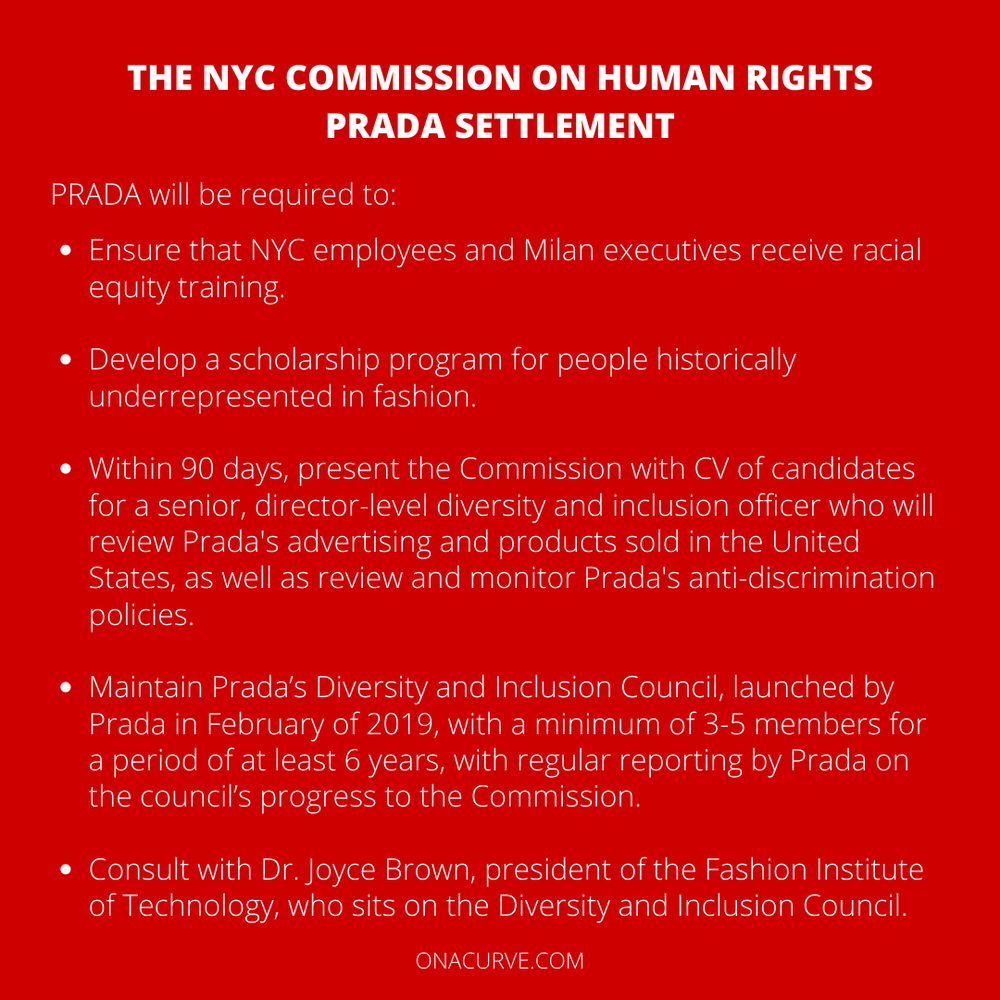
On Tuesday, just as the fashion industry was diving into New York Fashion Week festivities, the New York City Commission on Human Rights sent a message to the powers that be - racial discrimination in the fashion industry will not be tolerated.
Vanessa Friedman of the New York Times exclusively reported that the Commission had finally settled with Prada after over a year of investigations into Prada's violation of Title 8 of the Administrative Code of the City of New York, which protects against “Unlawful discriminatory practices.” This settlement is the result of Chinyere Ezie’s 2018 #boycottPrada movement that condemned Prada’s decision to design and market a keychain that had a striking resemblance to Blackface. Chinyere subsequently filed a formal complaint with the Commission on Jan. 4th 2019. In a press release today, the Commission concluded that “The display of such racist iconography manifests as discrimination on the basis of race, suggesting that Black people are unwelcome.”
It is difficult to measure the impact this settlement will have on the fashion industry at-large. Still, one thing is clear, when it comes to discrimination in fashion, this is new territory, and the only way out is forward.
Three major takeaways from this historic decision:
1. The law has a significant role to play in ending or at least regulating racist acts in the fashion industry.
For too long, the fight against racism in fashion has been internal. The same brands who engage in discriminatory practices are often left to create their own solutions, and those most affected, are left with no guarantees of enforcement.
The Civil Rights Movement in the United States illustrates the symbiotic relationship between advocacy in the streets and the battle in the courts, which were sometimes at odds but mostly worked in unison to secure victories like the desegregation of public buses. While many people have advocated for diversity and inclusion in the fashion industry for decades, legal remedies have not often been pursued outside of employment discrimination issues.
In 2020, the impact of online advocacy and digital organizing is undeniable. For many people, online platforms have become a quasi-street, a place to express discontent with the wrongs in the world and to raise awareness around issues like police brutality, climate change, abortion rights, and much more. While digital organizing cannot replace on-the-ground grassroots mobilization, something is to be said about the power of this new forum and its unique role in our fight for justice on all fronts. After all, that is how Prada ended up here. Thousands of people on Instagram, Twitter and, Facebook expressed outrage about the Prada keychain, which led to a swift apology from the brand and a hastily assembled Diversity and Inclusion Advisory Council in 2019.
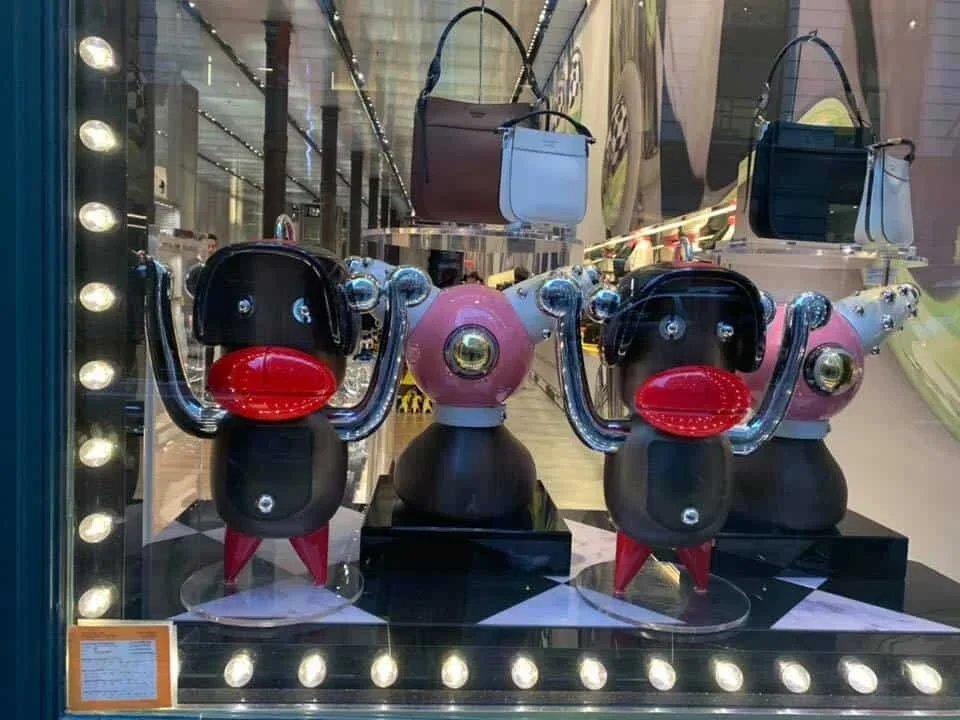
Pradamalia figurines resembling blackface.
While we may never know what solutions to anti-discrimination Prada may have come up with without intervention from the Commission, what we can measure is the brand’s severe lack of awareness for over two decades. As a “global brand," Prada has had minimal representation of diversity on its runways until recent years and has had even less diversity in its corporate offices. Just last year, Miuccia Prada disregarded concerns of cultural appropriation and also likened outrage from people color to a call for censorship on artistic freedom.
Based on Prada’s recent history, the brand was in no legitimate position to tackle issues of discrimination solo. What real effects would Prada’s self-supervision really have had? This settlement will test the legal enforcement of anti-discriminatory practices for the first time in fashion design. The Commission’s settlement marks, at least, the end to ineffective self-supervision for brands operating in the U.S. market, and at most, the beginning of the legal battle for civil rights in the fashion industry.
2. This settlement will provide people of color in fashion with a new outlook on remedies for combating discrimination, and it will empower legal advocates to get creative with the law and its new role in fashion.
Brands caught in a discriminatory act typically follow three steps - Step 1: apologize Step 2: commit to a diversity initiative and Step 3: present diversity in the external-facing aspects of the company. This three-step process was the status quo.
This settlement throws a cog in that wheel. Fashion brands may now be subject to civil penalties if they do not meet particular anti-discrimination standards. Carmelyn P. Malalis, Chair and Commissioner of the Commission said “The restorative justice measures required in this settlement may today be considered unconventional for law enforcement, but my hope is that government, here in New York City and across the country, continue to think outside the box to address and remedy historical and current harms perpetrated through anti-Black racism.”
This settlement opens up a whole new realm of possibilities. First, it will empower people of color. In fashion, there is a culture of fear when it comes to challenging discrimination. Fear that you may be fired or passed over for someone willing to stay silent in the face of injustice. While the culture of fear won’t quickly fade, this settlement provides people who may have once been crippled by that fear with hope for successfully challenging racism within their companies. For the first time, the remedies will feel real for many people.
Secondly, this settlement will make it harder for brands to hide behind the facade of “aesthetics and creative expression," which are far too often pretext for discrimination. We can expect that some brands will begin to think critically about their practices, and if they don’t, they may become subject to legal action.
Lastly, this settlement will most likely inspire a new wave of legal challenges. It remains to be seen whether the New York Commission on Human Rights will remain the primary forum for these kinds of disputes or whether cases will be brought in state and federal courts. We can, however, anticipate that states like New York will be a testing ground for other anti-discrimination challenges in fashion. The Commission is currently in negotiations with Gucci and Dior for past discriminatory acts.
Also, New York has one of the most expansive protections for independent contractors, which include most models and influencers. Unlike federal employment discrimination laws, NYC Human Rights Law makes it unlawful for employers to discriminate against independent contractors “based on a variety of protected statuses, including age, race, color, national origin, gender, partnership status, sexual orientation, and disability.” Black fashion freelancers may begin to consider racial discrimination challenges to disparity in gigs and pay rates.
3. Racism in fashion will not end overnight, and we can expect legal challenges to this settlement.
Statements from Prada and the Commission both reflect that Prada was cooperative throughout the settlement process. However, there is already some legal criticism surrounding the settlement, and pre-settlement discussions between Prada’s legal team and its executive suite will most likely never be know to the public.
William Kovacic, a professor law at George Washington University, suggests that the settlement may infringe upon free speech. He said, “If we extend the concept of screening to other sectors, my guess is there would be an uproar. If it’s a garment, why not a painting…they have targeted a sector [the fashion industry] that is inclined to placate or back off instead of questioning the use of public authority in this way.” His statements suggest that while that Prada’s legal team may think they have a valid challenge to the Commission’s settlement order, they are not likely to pursue it. It is in the best interest of Prada’s public relations and marketing teams to refrain from appearing to oppose the protection of civil rights. Also, questions about whether a local commission is the correct governmental body to decide matters that may implicate federal and state constitutional and statutory laws, especially when it relates to a global brand like Prada, are beginning to circulate on social media.
While these legal and tactical questions continue to arise, one thing we know for sure is that this outcome marks a new dawn in fashion. If this settlement is challenged in the future, those in opposition will not be able to revert to the status quo. Instead, we will have new standards set by the courts, and civil rights advocates will now have a role in ensuring that anti-discrimination laws gain a foothold in the world of fashion.
Lastly, all eyes will be on Prada as these settlement terms come to life over the next two years. Racism will not evaporate overnight, and it is difficult to gauge how practical these settlement terms will be. For example, what will the culture be like for Prada's current employees, and what procedures will be put in place to make sure Black people at Prada feel safe during this transition? Another critical question is, does placing the burden of review for all Prada’s advertising and products sold in the United States on one diversity and inclusion officer make sense for such a large entity? As Friedman said, “Given the hundreds of products Prada creates every season, this is a pretty extraordinary task.” Does it shift the burden off the institution, and will it create a hero or a scapegoat?
It will take intentional effort and commitment to ensure that these settlements yield positive results. It will be interesting to see what the industry makes of this historic settlement. Will this light a fire under the CFDA’s tepid efforts to promote diversity in the fashion industry, and what will the response from industry vanguards be?
Just because something has never been done before doesn’t mean it shouldn’t be done. We can create an anti-discriminatory culture in fashion, but history has shown us that we need ways to enforce it. This settlement is a "historic step towards eliminating" racism in the fashion industry.